
One Wrong Support Role Can Waste Valuable Hours
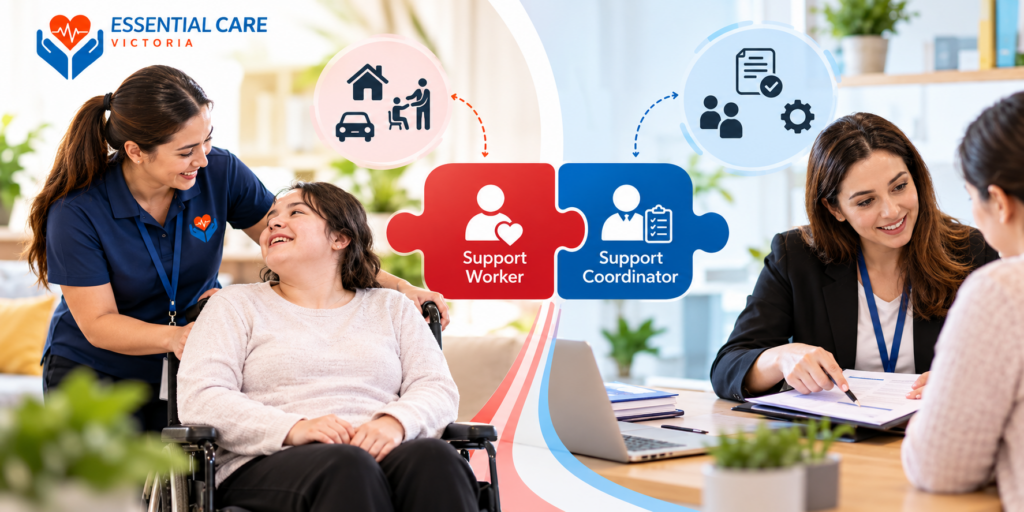
Choosing the right type of support is an important part of managing everyday care. A disability support worker and a support coordinator may both work with the same person, but their responsibilities are quite different. One focuses on practical, day-to-day assistance. The other helps organise services, communicate with providers and make sense of a person’s support arrangements. Confusing the two can result in time being spent on the wrong type of assistance. For families looking for disability support services in Melbourne, understanding this difference can make the search much easier. What Does a Disability Support Worker Do? A disability support worker in Melbourne generally provides practical assistance based on a person’s individual needs. Depending on the support arrangement, their work may include: Personal care and daily routines Household assistance Community participation Assistance with appointments Transport and outings Meal preparation Medication reminders Support with everyday activities The focus is usually on helping a person manage daily life and maintain greater independence. A support worker is not normally responsible for managing a person’s overall support plan or coordinating every service they receive. What Does a Support Coordinator Do? A support coordinator in Melbourne has a different role. Rather than providing regular hands-on assistance, a coordinator helps bring different parts of a person’s support together. This can involve: Connecting people with suitable providers Coordinating different services Communicating with support providers Helping resolve service-related issues Understanding available support arrangements Helping maintain consistency between different services People searching for support coordinators near me are generally looking for help organising their support rather than someone to provide regular personal care. Why Choosing the Right Support Matters The difference between these roles may seem straightforward, but it can easily become confusing when several services are involved. For example, a support worker may be the right person to assist with a daily routine, while a coordinator may be better placed to deal with a problem involving multiple providers. Using one role to perform the responsibilities of another can result in time and resources being used inefficiently. The right choice depends on the person’s individual circumstances, support requirements and existing arrangements. Support Coordination Can Vary Not everyone needs the same level of coordination. Some people may only need occasional assistance connecting with services, while others may require more ongoing coordination because they have multiple providers or more complex support requirements. A coordinator may therefore help with: Connecting servicesFinding and establishing relationships with appropriate providers. Managing communicationHelping different providers understand their responsibilities and work together. Addressing problemsAssisting when a service changes, becomes unavailable or is not meeting expectations. Building independenceHelping people develop the confidence and skills to manage their own support arrangements where possible. Finding Disability Support Services in Melbourne Searching for disability support services in Melbourne can produce many different providers and service types. Before contacting a provider, it helps to identify what kind of assistance is actually required. If the main need is help with everyday activities, personal care or community participation, a disability support worker may be appropriate. If the challenge is managing several providers, organising services or resolving coordination issues, a support coordinator may be more suitable. Some providers offer both types of services, but the responsibilities should remain clearly defined. Support Worker vs Support Coordinator Disability Support Worker Support Coordinator Provides practical, day-to-day assistance Helps organise and coordinate services Works directly with the individual May work with the individual and multiple providers Can assist with personal care and daily activities Helps manage communication between services Supports community participation and routines Helps address coordination issues Focuses on the person’s immediate support needs Focuses on the broader support arrangement The Key Takeaway A disability support worker and a support coordinator can both play an important role, but they serve different purposes. Understanding the difference before choosing a service can help individuals and families find support that better matches their actual needs. For people looking for disability support services in Melbourne, the most useful starting point is to identify the type of assistance required and then look for a provider with experience in that area.
